Language Preference Identification
Ask:
-
“Do any of you speak languages other than English?”
-
If yes, ask one of these follow-up questions:
-
“Cincinnati Children’s has free interpreters who are quickly available. What languages would you all want us to speak to you in?”
-
“Cincinnati Children’s has free interpreters who are quickly available. What languages would you all like to use for medical conversations?”
-
“Cincinnati Children’s has free interpreters who are quickly available. Will an interpreter be needed for this visit?”
-
“Cincinnati Children’s has free interpreters who are quickly available. In what language would you like to discuss your child’s health care today?"
-
Communicate this language preference to other team members during handoffs.
If someone is unable to say which language they speak:
-
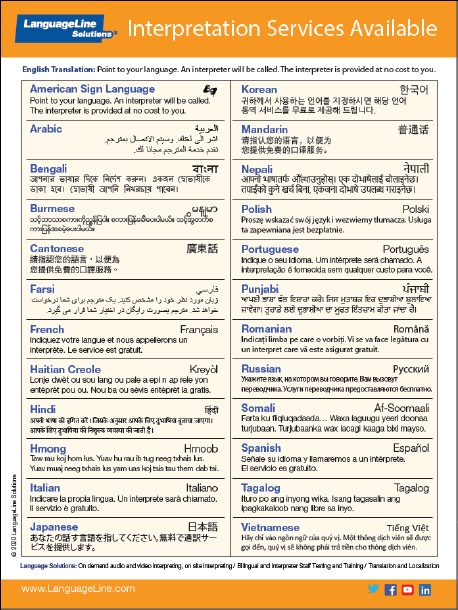
Use a language identification card (shown below) or the list of languages on the Alvin.
-
Call the phone interpreter line and ask the operator to assist you in identifying the language.
Demographics in Epic
For patients where at least one person sometimes wants to communicate in a language other than English, ensure the patient-level demographic fields have that language listed as "Preferred Language" and "Interpreter Needed" is set to "Yes."
This is a patient-level field so it should reflect the family’s needs for the future, not just a single visit.